The Two Layers
Depth
Natural language. The protocol is the communication layer between how a human thinks and how AI tools operate — split into two stacked layers.
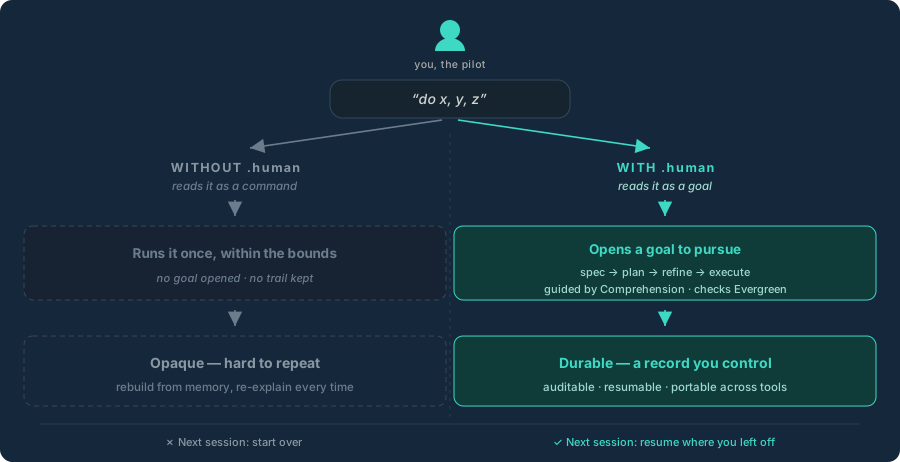
.human it's a command: run once, no goal, no trail → opaque, start over next session. With .human it's a goal: opened and pursued (spec → plan → refine → execute, guided by Comprehension, checking Evergreen) → durable, and you resume where you left off. (Advanced depth adds the shared Constitution and the full result + weeks-later detail.)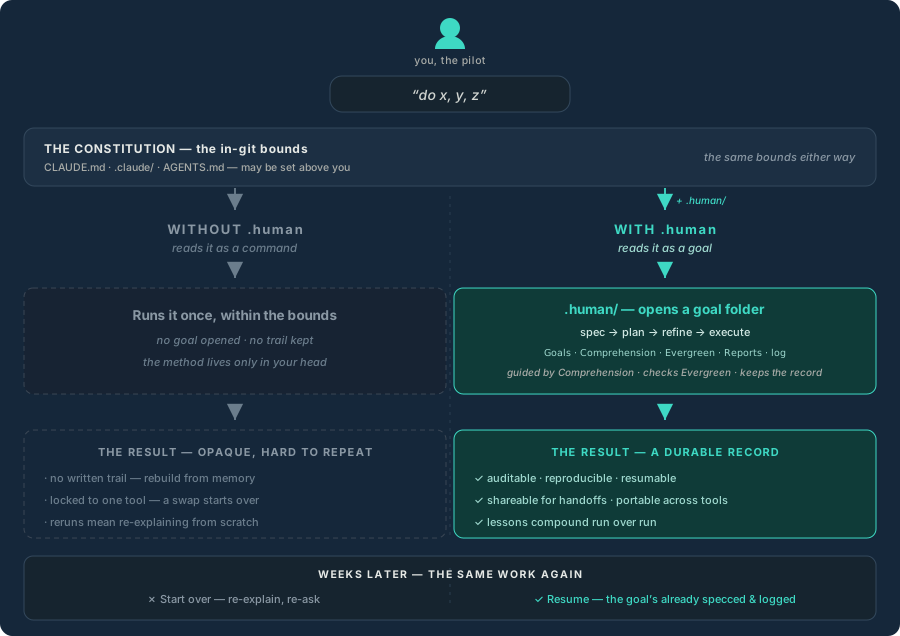
.human the agent reads it as a command: runs once, no goal, no trail → opaque, hard to repeat. With .human it reads it as a goal: opens a goal folder (spec → plan → refine → execute), guided by Comprehension and checking Evergreen, recorded in the .human/ pillars → durable: auditable, reproducible, resumable, shareable, portable, compounding. Weeks later: start over, or resume because the goal's already specced and logged.- Constitution — the in-git layer: your project's existing reviewed rules (
constitution.md,CLAUDE.md,.claude/,AGENTS.md), which live at the repo root, outside.human/. Slow, version-controlled; changes deliberately. These are the bounds the agent must stay within. .human/layer — the off-git layer the protocol adds beside the constitution — a sibling folder, not nested inside it. Lives with the project, moves at session speed, needs no review to change. Holds the pillars — Goals, Comprehension, Evergreen, Reports, andcaptainslog.md— plus pseudoskills as they emerge. This is the working trail: the off-git complement to the in-git constitution.
Where it sits
The protocol's design rests on keeping the fast layer out of the slow one. The Constitution is the reviewed foundation; the .human/ layer is where session-speed work happens above it.
Example
in-git    Constitution    constitution.md, CLAUDE.md, AGENTS.md   (slow, reviewed)
─────────────────────────────────────────────────────────────────────────────────
off-git   .human/ layer   Goals, Comprehension, Evergreen,        (session-fast,
                          Reports, captainslog.md, pseudoskills    unreviewed)
off-git / in-git — these are layer semantics, not strictly location. In-git = the tracked, reviewed, slow constitution layer. Off-git = the session-fast, unreviewed .human/ layer — kept out of the reviewed layer whether or not you commit it. Committing is a choice; see .human/ & git.
Related
Last updated