The Lifecycle
Organic growth. Once a project is dotHumanized, this is the loop you run on every goal.
Prerequisite: you're already in a dotHumanized project. Getting there is a one-time setup — see Your First dotHuman. This page is the part that repeats.
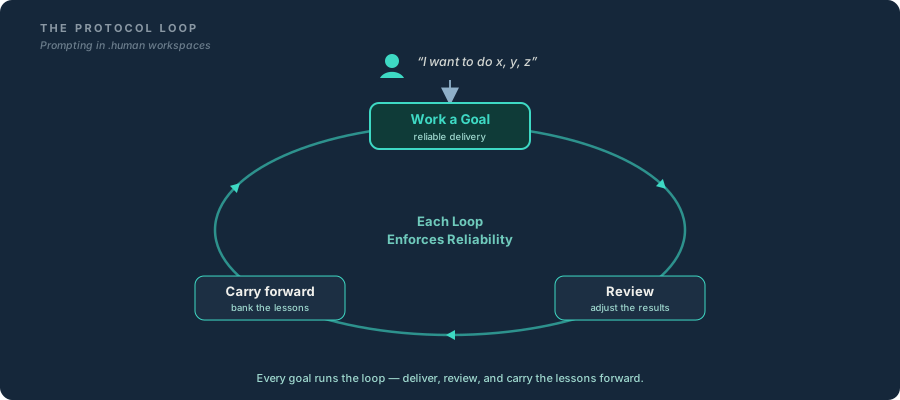
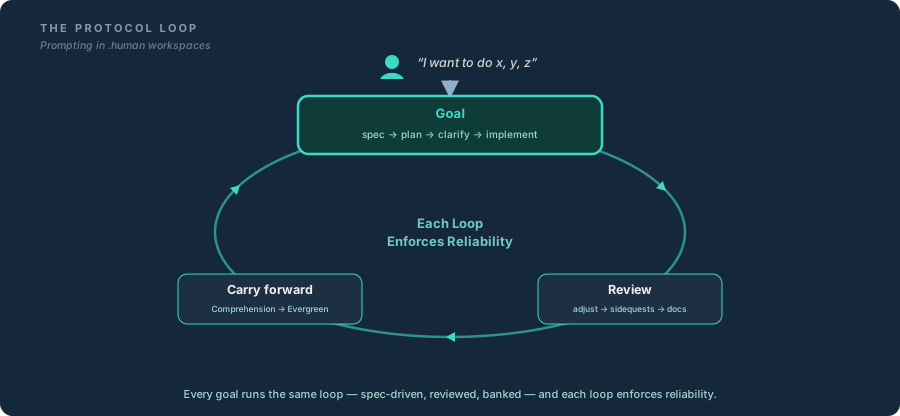
A person states an intent — “I want to do x, y, z” — and the protocol runs it as a loop. Each pass leaves the workspace a little more trusted than the last:
The loop, stage by stage
- Work a Goal — reliable delivery. Where most of the time goes, so it's the prominent stage. A goal isn't atomic: it's spec-driven before it's executed — spec → plan → clarify → implement — the request read as a goal to pursue, not a command to run once.
- Review — your sign-off. The human-in-the-loop checkpoint: you check the work, fold in any sidequests it surfaced, and approve what ships before it ships.
- Carry forward — bank the lessons. Decide which lessons and results fold back into the durable docs — Comprehension, Evergreen.
One trip through it
Say you ask: “add a contact form to the site.”
- Work a Goal — it opens a goal, specs what done means (which fields, where the messages go), plans the steps, checks one detail with you, then builds it.
- Review — you try it and sign off. Along the way it noticed the form had no spam protection — too small to be its own goal, so it's captured as a sidequest and folded in instead of derailing the work.
- Carry forward — the fix it had to hunt down (how to actually get submissions landing in your inbox) goes into the Captain's Log, and the steps for wiring up a form become an Evergreen runbook.
The next goal starts further ahead: a fresh agent reads that log and runbook and doesn't redo the legwork. That's the compounding — not the loop getting bigger, but each pass starting from a more-trusted, better-documented floor than the last.
Where it sits
This loop is how every goal runs once you're set up. The Lessons you carry forward don't just inform the next goal — they accumulate and mature on their own arc (Lesson → pseudoskill → Skill); that lineage lives on the pseudoskill page.
Related
Try it
Last updated